
Industry 5.0 is the next stage of industrial evolution — moving beyond the pure automation and data-driven efficiency of Industry 4.0 to place human workers, sustainability, and societal resilience at the center of manufacturing strategy. While Industry 4.0 connected machines and data, Industry 5.0 reconnects technology with human purpose. According to the European Commission's 2026 framework, this paradigm shift is already reshaping factory design, workforce strategy, and supply chain priorities across Europe and beyond. Whether you are a plant manager, a digital transformation leader, or an operations director, understanding Industry 5.0 is now essential to staying competitive in the decade ahead.
What Is Industry 5.0? A Clear Definition
Industry 5.0 is the industrial paradigm that places human well-being, environmental sustainability, and societal resilience alongside — and sometimes above — pure productivity and efficiency. It does not replace Industry 4.0 but builds on its technological foundations (IoT, AI, robotics, digital twins) while adding three core pillars: human-centricity, sustainability, and resilience.
The concept was formally defined by the European Commission in its landmark 2021 report and has since gained significant traction in industrial policy, R&D investment, and manufacturing strategy worldwide. By 2026, major economies including the EU, Japan, South Korea, and the United States have incorporated Industry 5.0 principles into their national industrial roadmaps.
The key distinction is philosophical as much as technological. Industry 4.0 asked: "How can machines do more, faster?" Industry 5.0 asks: "How can technology serve human beings and the planet better?" This shift has profound implications for how factories are designed, how workers are trained, and how value chains are structured.
- Human-centricity — Technology amplifies human skills rather than replacing workers
- Sustainability — Manufacturing processes are designed to be circular and carbon-neutral
- Resilience — Supply chains and production systems can adapt to disruptions (pandemics, climate events, geopolitical shocks)
These three pillars are not abstract ideals — they translate into concrete investments in collaborative robotics, green manufacturing, modular production lines, and worker upskilling programs.
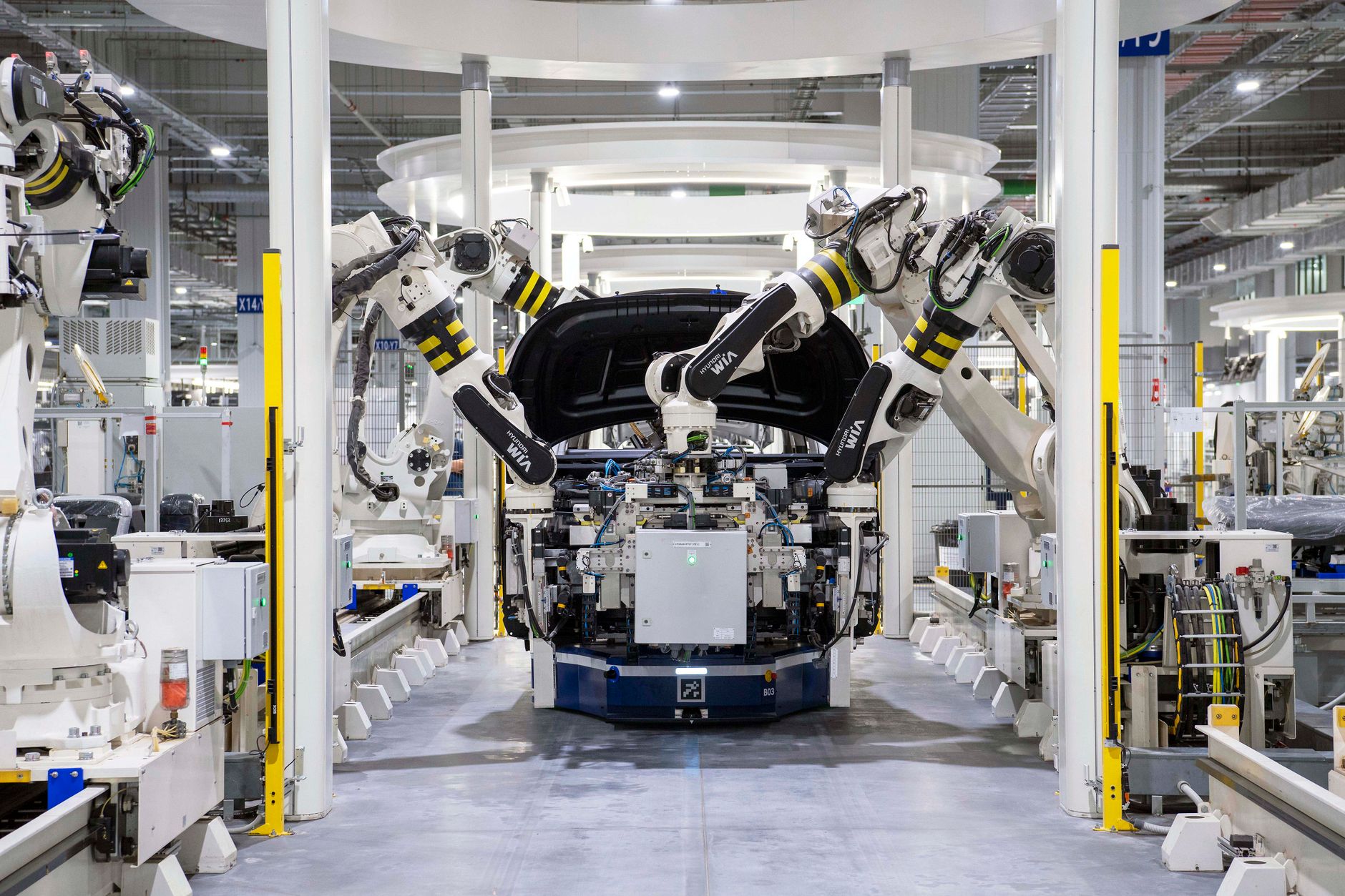
Industry 4.0 vs Industry 5.0: Key Differences Explained
Understanding the differences between Industry 4.0 and Industry 5.0 is critical for any manufacturer planning their digital transformation roadmap. These are not competing visions — they are sequential stages, each building on the previous one. However, the priorities, metrics of success, and design principles differ significantly.
Industry 4.0 was primarily driven by efficiency and automation: connecting machines via IoT, leveraging big data for predictive analytics, and deploying AI to optimize production throughput. The dominant KPIs were OEE (Overall Equipment Effectiveness), cycle time reduction, and cost per unit. The human worker was increasingly seen as a variable cost to be optimized or replaced.
Industry 5.0 reframes the equation entirely. The dominant KPIs now include carbon footprint per unit produced, worker well-being scores, supply chain adaptability indices, and circular economy metrics. Technology — including the same AI, robotics, and IoT from Industry 4.0 — is redeployed in service of human and planetary goals rather than pure throughput maximization.
| Dimension | Industry 4.0 | Industry 5.0 |
|---|---|---|
| Core focus | Automation & efficiency | Human-centricity & sustainability |
| Key technologies | IoT, AI, big data, cloud | Collaborative robotics, green tech, bio-inspired AI |
| Worker role | Supervised by machines | Augmented by machines |
| Primary KPIs | OEE, throughput, cost/unit | Carbon footprint, well-being, resilience index |
| Supply chain goal | Lean & just-in-time | Resilient & circular |
| Environmental stance | Efficiency as a proxy for sustainability | Explicit carbon-neutral & circular targets |
| Innovation driver | Competitive advantage | Societal value + competitive advantage |
The 3 Core Pillars of Industry 5.0 in Practice
The three pillars of Industry 5.0 — human-centricity, sustainability, and resilience — each translate into specific technologies, processes, and organizational changes. Here is how leading manufacturers are implementing them in 2026.
Pillar 1: Human-Centric Manufacturing
Human-centric manufacturing means designing production systems around human capabilities, health, and fulfillment — not the other way around. This is operationalized through collaborative robotics (cobots), exoskeletons, AI-assisted decision support tools, and ergonomic workstation design. The goal is to eliminate repetitive, dangerous, or cognitively exhausting tasks while preserving — and amplifying — the uniquely human skills of creativity, judgment, and craftsmanship.
In practice, this means workers on a cobot-assisted assembly line are freed from repetitive bolt-tightening but are empowered to handle quality exceptions, process improvements, and customer customization requests. Companies like BMW, Bosch, and Faurecia have already deployed this model at scale. According to a 2026 McKinsey survey, factories with human-centric designs report 23% lower absenteeism and 18% higher productivity compared to fully automated lines.
- Cobots and exoskeletons — Reduce physical strain and injury rates by up to 60%
- AI decision support — Operators receive real-time recommendations, not just alerts
- Continuous upskilling — Workers are trained on digital tools, not just machine operation
- Inclusive design — Workstations adapt to workers of different ages, abilities, and backgrounds
Pillar 2: Sustainable Manufacturing
Sustainability in Industry 5.0 goes far beyond energy efficiency. It encompasses circular economy principles, carbon-neutral production targets, responsible sourcing, and end-of-life product design. By 2026, the EU's Corporate Sustainability Reporting Directive (CSRD) and Carbon Border Adjustment Mechanism (CBAM) have made sustainability reporting a legal obligation for most large manufacturers — and a competitive differentiator for mid-market players.
The practical toolkit includes digital product passports (tracking materials from source to recycling), AI-optimized energy management systems, green hydrogen integration in heavy industry, and closed-loop manufacturing where waste from one process becomes input for another. Companies that have adopted circular manufacturing models report material cost reductions of 15–30% over a five-year horizon, according to the Ellen MacArthur Foundation's 2026 industry report.
Pillar 3: Resilient Supply Chains and Production Systems
The COVID-19 pandemic, the 2021 semiconductor shortage, and the 2022–2026 series of geopolitical disruptions exposed the fragility of hyper-optimized, just-in-time supply chains. Industry 5.0's resilience pillar directly addresses this vulnerability by advocating for modular, adaptable production systems and diversified supply networks. This does not mean abandoning efficiency — it means building systems that can absorb shocks without catastrophic failure.
Resilient manufacturing relies on technologies like digital twins for scenario planning, AI-driven supply chain risk monitoring, nearshoring strategies, and multi-sourcing policies. Manufacturers with high resilience scores — as measured by the World Economic Forum's Supply Chain Resilience Index — experienced 40% lower revenue impact during the 2025 logistics disruptions compared to their less resilient peers.
- Productivity gain with cobots
- +18 %
- Material cost reduction (circular model)
- -22 %
- Revenue impact reduction (resilient supply chain)
- -40 %
- Absenteeism reduction (human-centric design)
- -23 %
Key Technologies Powering Industry 5.0
Industry 5.0 does not introduce entirely new technologies — it reorients and extends the technology stack of Industry 4.0 toward human and planetary goals. The following technologies are central to the Industry 5.0 transition in 2026.
The technology landscape can be grouped into three clusters: human-augmentation technologies, sustainable production technologies, and resilience-enabling technologies. Each cluster plays a distinct role in realizing the Industry 5.0 vision.
- Collaborative robots (cobots) — Designed to work safely alongside humans without safety cages; the global cobot market is projected to reach $12.3 billion by 2027
- AI and machine learning — Applied to quality control, energy optimization, predictive maintenance, and worker decision support; see our guide on ERP integration with AI for manufacturers
- Digital twins — Virtual replicas of physical assets used for simulation, training, and real-time optimization
- Green energy management systems — AI-driven platforms that optimize energy consumption and integrate renewable sources
- Bio-inspired manufacturing — Production processes modeled on biological systems (self-healing materials, adaptive structures)
- Edge computing and 5G — Enable real-time data processing at the machine level with ultra-low latency
- Blockchain for supply chain transparency — Immutable records of material provenance and carbon footprint across the value chain
The integration of these technologies requires robust data infrastructure. Manufacturers who have already invested in modern supply chain platforms are significantly better positioned to layer Industry 5.0 capabilities on top of their existing systems.
Industry 5.0 is not a technology revolution — it is a values revolution that uses technology as its instrument. The factories that will lead in 2030 are those that ask not just 'what can we automate?' but 'what kind of future do we want to build?'
— Adam Bagdadi, Author — De la vision à l'action : l'avenir de l'industrie (Digital Factory, 2023)
How to Transition from Industry 4.0 to Industry 5.0: A Practical Roadmap
Transitioning to Industry 5.0 is not a single project — it is a strategic reorientation that unfolds over multiple years. The good news is that most manufacturers do not need to start from scratch. The Industry 4.0 investments you have already made in IoT sensors, MES systems, ERP integration, and data analytics form the foundation on which Industry 5.0 capabilities are built.
The following five-step roadmap is based on best practices observed across European and North American manufacturing leaders in 2026. It is designed to be pragmatic, phased, and measurable — not a theoretical framework but an actionable plan.
- Assess your current maturity level — Audit your existing Industry 4.0 capabilities (connectivity, data quality, automation level) and identify gaps relative to Industry 5.0 requirements (worker well-being metrics, carbon reporting, supply chain resilience scores)
- Define your Industry 5.0 ambition — Set specific, measurable targets for each pillar: a carbon reduction target, a worker well-being index baseline, and a resilience score. Align these with EU CSRD requirements and customer sustainability expectations
- Redesign workstations and workflows — Involve workers in the redesign process. Deploy cobots and AI decision-support tools in high-priority areas first (physically demanding tasks, quality inspection, logistics)
- Build circular material flows — Map your material inputs and waste streams. Identify opportunities for closed-loop recycling, supplier take-back programs, and bio-based material substitution
- Strengthen supply chain resilience — Diversify your supplier base, build strategic buffer stocks for critical components, and deploy AI-powered risk monitoring tools to detect disruptions before they cascade
Progress should be tracked using a combination of operational KPIs and sustainability metrics. A well-designed Industry 5.0 dashboard integrates both dimensions in real time, giving leadership a unified view of performance across all three pillars.
Industry 5.0 in Action: Real-World Examples and Case Studies
The most convincing evidence for Industry 5.0's value comes from manufacturers who have already begun the transition. Across sectors — from automotive to pharmaceuticals to consumer goods — early adopters are demonstrating that human-centric, sustainable, and resilient manufacturing is not just ethically desirable but economically superior.
Automotive: BMW's Human-Robot Collaboration at Scale
BMW's plant in Regensburg, Germany, is widely cited as a benchmark for Industry 5.0 implementation. The facility deploys over 1,000 cobots working alongside human operators on assembly lines. Rather than replacing workers, the cobots handle torque-intensive and ergonomically hazardous tasks, while human workers focus on quality verification, complex assembly sequences, and customer-specific customization. The result: a 31% reduction in musculoskeletal injuries, a 14% increase in line throughput, and a significant improvement in worker satisfaction scores. BMW reports that the cobot investment paid back within 18 months — and that worker retention in cobot-assisted departments is 27% higher than in traditional lines.
Chemicals: BASF's Circular Manufacturing Model
BASF has pioneered circular manufacturing at its Ludwigshafen Verbund site, where the waste streams of one production process feed directly into another. By 2026, the site has achieved a 98% material utilization rate — meaning less than 2% of input materials end up as unrecoverable waste. AI-powered energy management systems have reduced site-wide energy consumption by 19% since 2022, while a digital product passport system now tracks the carbon footprint of every product from raw material to customer delivery. BASF's circular model has become a reference for the European Chemical Industry Council's Industry 5.0 transition guidelines.
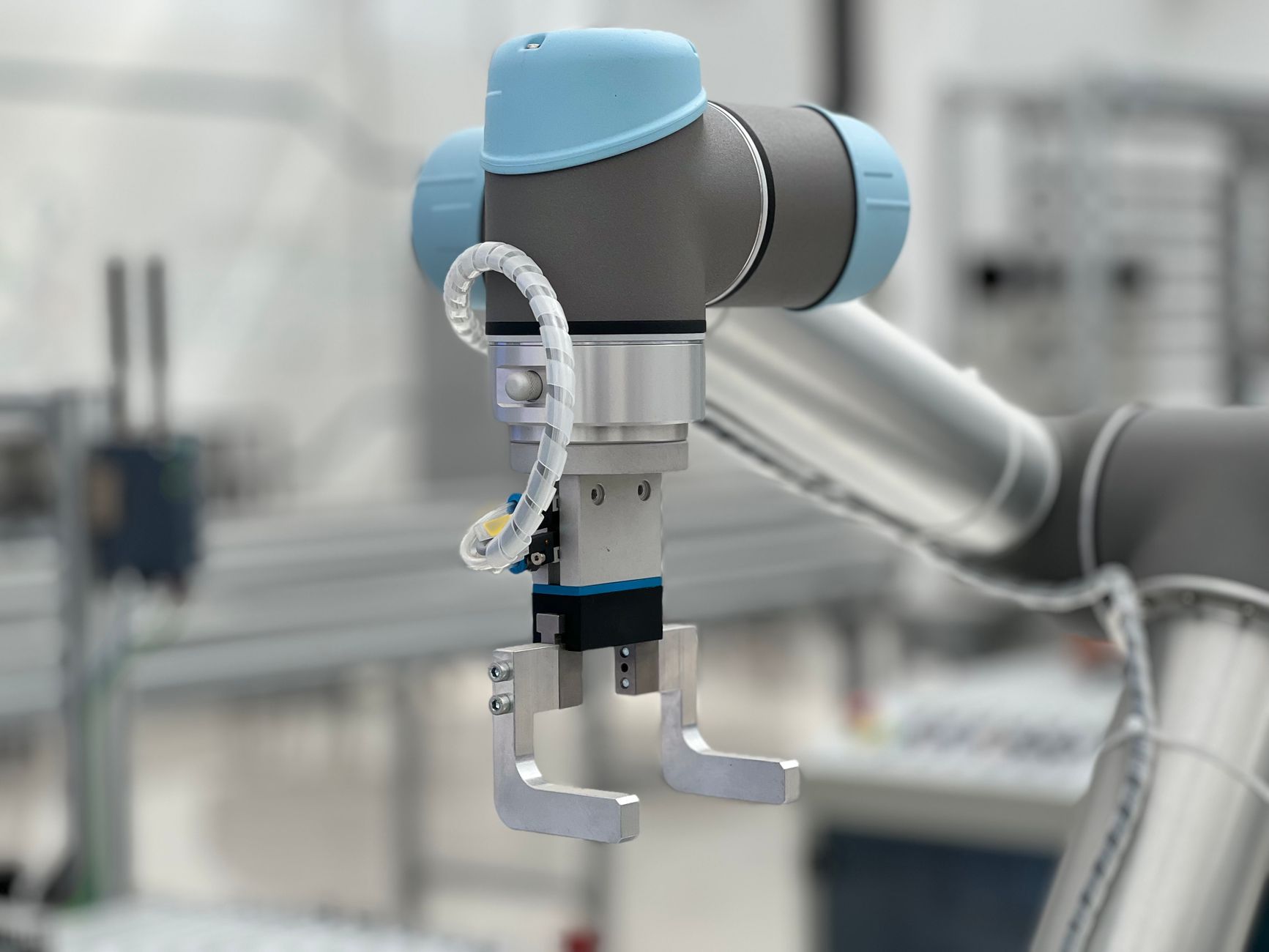
Measuring Industry 5.0 Success: KPIs and Metrics That Matter
One of the most common questions from operations leaders is: "How do we measure our Industry 5.0 progress?" The answer requires expanding the traditional manufacturing KPI framework to include human and environmental dimensions alongside operational performance metrics.
The European Commission's Industry 5.0 measurement framework, updated in 2026, recommends tracking KPIs across all three pillars simultaneously. This integrated approach prevents the common trap of optimizing one pillar at the expense of another — for example, achieving carbon targets by automating away jobs, or improving worker well-being by accepting lower productivity.
The following KPI framework is recommended for manufacturers at the start of their Industry 5.0 journey:
- Human pillar KPIs: Worker well-being index (WBI), cobot collaboration rate, upskilling hours per employee per year, ergonomic incident rate, employee Net Promoter Score (eNPS)
- Sustainability pillar KPIs: Scope 1+2 carbon emissions per unit produced, material circularity rate, renewable energy share, water intensity, digital product passport coverage rate
- Resilience pillar KPIs: Supply chain diversification index, mean time to recover (MTTR) from disruptions, on-time delivery rate under stress scenarios, inventory flexibility ratio
- Operational pillar KPIs (retained from Industry 4.0): OEE, first-pass yield, unplanned downtime, cost per unit
Tracking these KPIs effectively requires a unified data platform that integrates MES, ERP, HR, and sustainability reporting systems. This is precisely where AI-powered ERP integration becomes a critical enabler of the Industry 5.0 transition.
- Industry 5.0
- Human-Centricity
- Sustainability
- Resilience
- Key Technologies
- Collaborative Robots
- Worker Upskilling
- Ergonomic Design
- Circular Economy
- Carbon Neutrality
- Digital Product Passport
- Supply Chain Diversification
- Modular Production
- AI & Machine Learning
- Digital Twins
- 5G & Edge Computing
Frequently Asked Questions About Industry 5.0
- What is Industry 5.0 in simple terms?
- Industry 5.0 is the next phase of industrial development that places human well-being, environmental sustainability, and societal resilience at the center of manufacturing strategy. It builds on the automation and data technologies of Industry 4.0 but reorients them toward human and planetary goals rather than pure efficiency and cost reduction.
- What are the main differences between Industry 4.0 and Industry 5.0?
- Industry 4.0 focused primarily on automation, connectivity, and efficiency — using IoT, AI, and big data to optimize production throughput. Industry 5.0 adds three new priorities: human-centricity (technology augments workers rather than replacing them), sustainability (manufacturing targets carbon neutrality and circular material flows), and resilience (supply chains and production systems are designed to absorb disruptions). Industry 5.0 does not replace Industry 4.0 — it extends and reorients it.
- Is Industry 5.0 already happening in 2026?
- Yes. By 2026, Industry 5.0 is actively being implemented by leading manufacturers across Europe, Japan, and North America. The European Commission has embedded Industry 5.0 principles into its Horizon Europe R&D funding program, and major manufacturers like BMW, BASF, and Siemens have published Industry 5.0 roadmaps. However, most manufacturers are still in the early stages of the transition.
- What technologies are most important for Industry 5.0?
- The most critical technologies for Industry 5.0 include collaborative robots (cobots) for human-robot collaboration, AI-powered decision support systems, digital twins for simulation and resilience planning, green energy management platforms, blockchain for supply chain transparency, and circular economy management software. These technologies are often layered on top of existing Industry 4.0 infrastructure.
- How does Industry 5.0 affect manufacturing workers?
- Industry 5.0 is designed to benefit manufacturing workers by eliminating dangerous, repetitive, and ergonomically harmful tasks through cobot collaboration and exoskeletons. Workers are repositioned as decision-makers, quality experts, and innovation contributors. This requires significant investment in upskilling and continuous learning programs. Research shows that factories with human-centric designs report lower absenteeism, higher productivity, and better worker retention.
- How do I start implementing Industry 5.0 in my factory?
- Start by assessing your current Industry 4.0 maturity and identifying gaps in worker well-being metrics, carbon reporting, and supply chain resilience. Then set specific, measurable targets for each Industry 5.0 pillar aligned with regulatory requirements (e.g., EU CSRD). Prioritize high-impact, quick-win projects such as deploying cobots in ergonomically hazardous workstations, launching a carbon tracking program, and diversifying your top-tier suppliers. Build a unified KPI dashboard to track progress across all three pillars simultaneously.
Conclusion: Industry 5.0 Is Both a Strategic Imperative and a Competitive Advantage
Industry 5.0 is not a distant vision — it is an active transformation reshaping manufacturing strategy in 2026. The manufacturers who will lead the next decade are those who understand that human creativity, environmental responsibility, and operational resilience are not trade-offs against efficiency — they are the new foundations of sustainable competitive advantage.
The transition requires deliberate investment in people, technology, and process redesign. It demands new metrics, new partnerships, and a willingness to question assumptions inherited from the lean manufacturing era. But the evidence is clear: companies that embrace Industry 5.0 principles are already reporting measurable gains in productivity, worker retention, material costs, and supply chain robustness.
The book De la vision à l'action : l'avenir de l'industrie by Adam Bagdadi (Digital Factory, 2023) remains one of the most comprehensive frameworks for understanding this transition in the French-language industrial context — mapping the journey from Industry 4.0 to the factory of the future with practical clarity. For manufacturers ready to move from vision to action, the tools, frameworks, and case studies are now available to make Industry 5.0 a reality on your factory floor.