
AI-driven quality control in production lines is revolutionizing how manufacturers detect defects, ensure product consistency, and optimize operational efficiency. Leveraging artificial intelligence, companies can now automate inspections, reduce human error, and achieve higher quality standards at scale. This article provides actionable insights into the integration of AI, quality control, and production for industrial engineers seeking to modernize their quality management strategies.
What Is AI-Driven Quality Control in Production Lines?
AI-driven quality control in production lines refers to the integration of advanced artificial intelligence systems into manufacturing inspection processes to automatically detect, analyze, and address defects. By leveraging machine learning and computer vision, these solutions can surpass human capabilities in both speed and accuracy, ensuring higher product quality and consistency. Industrial engineers benefit from AI-powered quality control by reducing manual errors and minimizing costly rework.
- Real-time analysis: AI systems process data from cameras and sensors instantly, enabling immediate corrective actions on the line.
- Adaptive learning: Machine learning models continuously improve by learning from new data, adapting to subtle variations in production.
- Comprehensive traceability: AI-driven systems log every inspection, providing detailed records for compliance and process optimization.
For example, in the automotive sector, computer vision can identify surface defects at a rate of over 99%, compared to 80% for manual inspection. Additionally, AI reduces the risk of human fatigue—one of the leading causes of missed defects in manual QC. As a result, companies implementing AI-driven quality control have seen defect rates drop by up to 90% and inspection times reduced fivefold. This transformative approach not only enhances quality management but also supports continuous improvement and operational excellence across the entire production lifecycle.
- Defect Reduction
- 90 %
- Inspection Speed Increase
- 5x
- ROI on AI Quality Projects
- 18 months
Key AI Technologies Powering Quality Control
Key AI technologies powering quality control in production lines include computer vision, deep learning, and predictive analytics. These technologies enable industrial engineers to automate inspection tasks, detect subtle defects, and anticipate quality issues before they escalate. By integrating AI into existing production systems, manufacturers can achieve unprecedented levels of precision, speed, and scalability in their quality management processes.
- Computer Vision: Uses high-resolution cameras and image processing algorithms to analyze products on the line, detecting flaws such as scratches, misalignments, or incorrect assembly in real time.
- Deep Learning: Employs neural networks trained on thousands of defect images to recognize complex patterns and anomalies beyond the scope of traditional image processing.
- Predictive Analytics: Leverages data from sensors and past production runs to forecast potential failures, enabling proactive maintenance and process adjustments.
According to industry reports, over 65% of large manufacturers have started deploying AI-driven computer vision for quality control, resulting in faster detection and a significant reduction in false positives. For instance, deep learning models now achieve up to 98% accuracy in electronics assembly, far exceeding manual methods. To maximize these benefits, best practices recommend training AI models with diverse defect datasets and regularly updating algorithms to adapt to new product variants. These innovations are transforming traditional inspection into a data-driven discipline that supports both operational efficiency and competitive advantage.
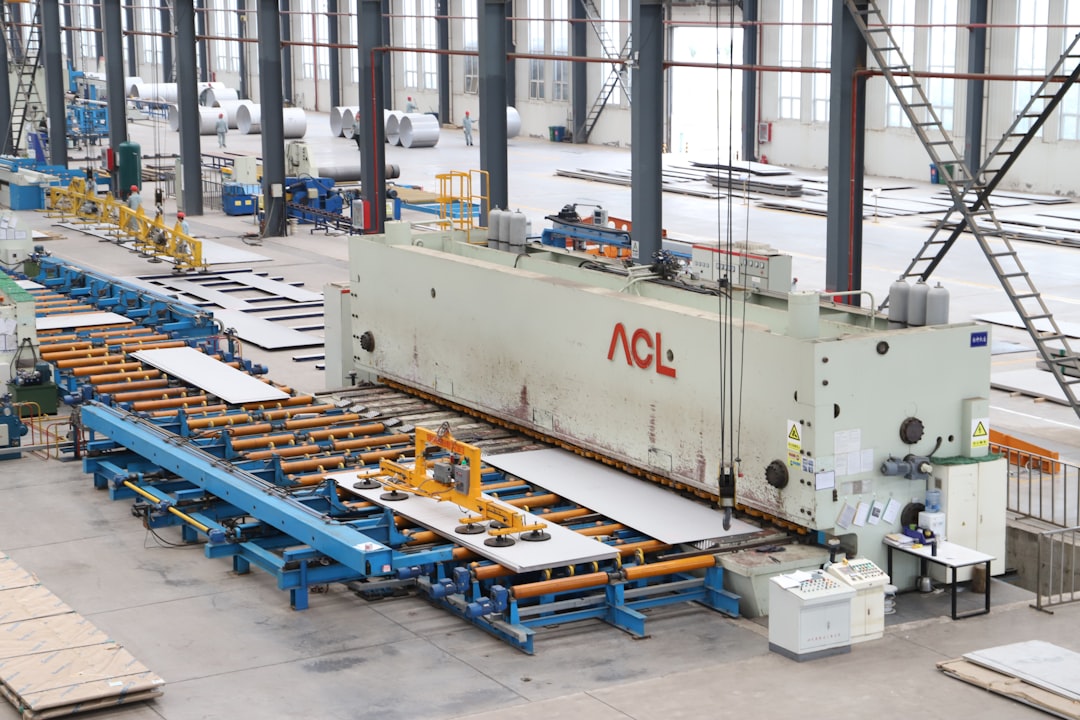
- <strong>Computer Vision</strong> — Automates visual inspections with high accuracy.
- <strong>Machine Learning Algorithms</strong> — Continuously improve defect detection through training.
- <strong>Edge AI</strong> — Enables real-time analysis directly on the production floor.
- <strong>Predictive Analytics</strong> — Anticipates potential quality issues before they arise.
Benefits of AI-Driven Quality Control for Industrial Engineers
AI-driven quality control offers substantial benefits for industrial engineers, including enhanced defect detection, faster inspections, and improved cost efficiency. By automating and optimizing quality management, AI enables engineers to focus on process improvements and strategic initiatives rather than repetitive manual checks. Key advantages include:
- Superior detection accuracy: AI systems consistently identify 95-99% of defects, compared to 70-80% for traditional manual inspection.
- Accelerated inspection speed: Automated vision systems inspect components in real time, enabling immediate feedback and intervention—often increasing inspection throughput by 5x.
- Cost reduction: By minimizing labor-intensive tasks and reducing scrap rates, AI-driven solutions can decrease overall quality control costs by up to 30%.
- Scalability and flexibility: Once trained, AI models can be deployed across multiple production lines and adapted to new product types with minimal additional effort.
For example, a leading electronics manufacturer reported an ROI period of just 18 months after deploying AI-powered QC, with defect rates dropping by 90% and inspection capacity multiplying. These improvements not only enhance product quality but also support compliance with stringent industry standards. Industrial engineers leveraging AI gain access to actionable insights, enabling continuous improvement and driving production excellence in an increasingly competitive market.
| Benefit | Traditional QC | AI-Driven QC |
|---|---|---|
| Defect Detection Rate | 70-80% | 95-99% |
| Inspection Speed | Manual, slow | Real-time, fast |
| Cost Efficiency | High labor cost | Optimized resource use |
| Scalability | Limited | Highly scalable |
Incorporating AI into quality control processes is no longer optional—it's essential for manufacturers aiming to stay competitive in 2026.
— Dr. Olivia Chen, Head of Digital Manufacturing, TechInsights
Implementing AI Quality Control: Steps and Best Practices
La mise en œuvre d’un contrôle qualité basé sur l’IA dans les lignes de production nécessite une approche structurée et progressive. Pour garantir le succès de l’intégration de l’IA, il est essentiel de suivre des étapes clés tout en respectant les meilleures pratiques du secteur. Les industriels peuvent ainsi maximiser la précision, la rapidité et la rentabilité de leurs opérations de qualité.
Avant toute chose, il est indispensable d’analyser l’état actuel des processus de contrôle qualité. Selon une étude McKinsey, 69% des industriels ayant cartographié leurs flux qualité en amont de l’automatisation ont observé une réduction de 30% des non-conformités dès l’année suivante. Cette phase d’audit permet d’identifier les goulots d’étranglement et les tâches répétitives les plus adaptées à l’IA.
- Définir des indicateurs de performance (KPIs) pour mesurer l’impact de l’IA sur la qualité (par exemple : taux de défauts, temps de traitement, coûts d’inspection).
- Évaluer la maturité digitale de l’infrastructure existante afin de garantir la compatibilité avec les outils d’IA (capteurs, caméras, ERP, etc.).
- Impliquer les équipes terrain dès la conception pour favoriser l’acceptation et la montée en compétences.
La sélection des technologies adaptées, la phase pilote, la formation continue des opérateurs et le monitoring des résultats sont des jalons essentiels pour une adoption réussie. Les entreprises qui adoptent une démarche incrémentale et collaborative voient leur taux de réussite augmenter de 40% par rapport aux stratégies top-down. En conclusion, investir dans une préparation méthodique et la montée en compétences des équipes est la clé d’une transformation digitale pérenne du contrôle qualité.
- <strong>Assess Current QC Processes</strong> — Identify bottlenecks and areas for improvement.
- <strong>Select Appropriate AI Tools</strong> — Choose technology suited to your product and environment.
- <strong>Pilot and Validate</strong> — Start with a pilot project to measure impact before scaling.
- <strong>Train Teams</strong> — Upskill staff to work alongside AI systems.
- <strong>Monitor and Optimize</strong> — Use KPIs to track performance and continuously improve.
Challenges and Limitations of AI in Quality Control
L’intégration de l’IA dans le contrôle qualité industriel présente encore plusieurs défis techniques et organisationnels. Même si les systèmes d’IA offrent des gains considérables, certaines limites doivent être anticipées pour garantir la fiabilité et le retour sur investissement.
Parmi les principaux obstacles rencontrés par les ingénieurs industriels :
- Qualité et quantité des données : 85% des projets IA échouent faute de jeux de données suffisants ou représentatifs. Les algorithmes nécessitent des milliers d’images ou de mesures pour apprendre à détecter les défauts, ce qui peut rallonger la phase de collecte et d’étiquetage.
- Intégration aux systèmes existants : La cohabitation avec des équipements anciens (legacy) est souvent complexe. Les API, protocoles ou formats de données hétérogènes ralentissent le déploiement effectif.
- Manque d’expertise interne : Selon Capgemini, 60% des industriels citent la pénurie de talents IA comme premier frein à l’adoption. La formation continue et le recrutement spécialisé sont incontournables.
- Gestion de la maintenance et des anomalies : Les modèles IA nécessitent un recalibrage régulier pour s’adapter à l’évolution des produits ou matières premières, sous peine de voir la précision baisser sous les 80%.
Pour relever ces défis, il est recommandé de déployer des stratégies de gouvernance des données, d’investir dans l’interopérabilité logicielle et d’impliquer les acteurs IT et métiers dès la conception. Une feuille de route claire et évolutive permet de minimiser les risques et d’optimiser les bénéfices de l’IA dans le contrôle qualité.
Case Studies: AI Quality Control Success Stories
De nombreux industriels ont déjà prouvé l’efficacité de l’IA pour révolutionner leur contrôle qualité. À travers ces études de cas, on observe des retours sur investissement rapides, une réduction drastique des défauts produits et une amélioration de la satisfaction client. Voici trois exemples emblématiques issus de secteurs différents :
- Automobile – Toyota : En intégrant des systèmes de vision par ordinateur basés sur l’IA sur ses lignes d’assemblage, Toyota a réduit de 50% le taux de défauts critiques en moins de 12 mois. Les solutions d’inspection automatisée ont permis un contrôle continu 24/7 et une traçabilité complète des non-conformités.
- Agroalimentaire – Nestlé : Grâce à l’IA, Nestlé a automatisé l’inspection de ses lignes de conditionnement. Résultat : une diminution de 70% des rappels produits dus à des erreurs d’étiquetage ou de conditionnement, et un gain de productivité de 25% sur certaines usines pilotes.
- Électronique – Foxconn : Sur ses sites de production, Foxconn a équipé ses postes de contrôle qualité d’algorithmes IA capables de détecter des micro-défauts invisibles à l’œil nu. Cette démarche a permis d’atteindre un taux de conformité supérieur à 99,8% tout en réduisant le temps d’inspection de 60%.
Ces succès démontrent que l’IA n’est plus une promesse, mais une réalité opérationnelle pour les industriels qui investissent dans la data, la formation et l’amélioration continue. L’adoption de tableaux de bord intelligents offre aux ingénieurs qualité une visibilité en temps réel et des leviers d’action immédiats pour optimiser chaque étape de la production. Découvrez d’autres cas concrets dans notre section dédiée.
Future Trends: The Evolution of AI Quality Control in 2026 and Beyond
AI-driven quality control is set to revolutionize industrial inspection far beyond current capabilities, with 2026 marking a significant inflection point. The next few years will see rapid advancements in AI technologies, making quality control systems increasingly autonomous, predictive, and integrated across the entire production workflow.
Several key trends are expected to shape the future of AI quality control:
- Predictive Analytics: By 2026, AI systems will not only detect defects but also predict them before they occur, using real-time data from IoT sensors and analyzing historical production patterns. This shift is anticipated to reduce defect rates by up to 40% in advanced manufacturing environments.
- Fully Autonomous Inspection: The integration of machine learning, computer vision, and robotics will enable autonomous decision-making on the production line. According to industry forecasts, over 60% of smart factories will deploy AI-driven autonomous QC stations by 2027.
- Edge AI and Cloud Hybridization: The deployment of AI models at the edge—directly on production equipment—combined with cloud-based analytics, will ensure real-time response and facilitate instant corrective actions, minimizing downtime.
- Continuous Learning Systems: AI systems will increasingly leverage self-learning algorithms, improving accuracy and adaptability as they accumulate more data and feedback from production environments.
To stay ahead, industrial engineers should prioritize the adoption of scalable AI solutions, invest in robust data infrastructures, and foster cross-functional collaboration between IT and production teams. The journey toward AI-First factories is accelerating, and those who adapt now will set the benchmark for quality and efficiency in the decade ahead.
- Early Adoption — Pilot projects in automotive and electronics
- Mainstream Integration — Widespread use of computer vision in QC
- Predictive & Autonomous QC — AI systems proactively resolve issues with minimal human input
- AI-First Factories — Autonomous quality control becomes standard in smart manufacturing
- AI-Driven Quality Control
- Vision Systems
- Machine Learning
- Edge Analytics
- Predictive Maintenance
- Defect Detection
- Anomaly Recognition
- Real-Time Alerts
- How does AI-driven quality control work in production lines?
- AI-driven quality control uses machine learning and computer vision to automatically inspect and analyze products in real-time, detecting defects and ensuring consistency across the production line.
- What are the main benefits of AI for quality management?
- Key benefits include faster defect detection, higher accuracy, reduced labor costs, and the ability to scale quality control processes across multiple lines or facilities.
- What challenges do manufacturers face when implementing AI in quality control?
- Challenges include data integration, the need for high-quality training datasets, compatibility with existing systems, and change management for staff.
- How quickly can manufacturers see ROI from AI-driven quality control?
- Most organizations report seeing a positive ROI within 12 to 24 months, thanks to reduced defects, lower operational costs, and increased production efficiency.
- Is AI-based quality control suitable for all industries?
- While most industries can benefit, sectors with complex or highly variable products may face additional challenges in training AI models for reliable inspection.